Solenopora: An Ancient Signature Within Portland Stone
One of the most distinctive features found within Portland Stone is Solenopora, a red calcium carbonate precipitating algae that lived in the warm tropical seas covering the Isle of Portland during the Late Jurassic period, around 145 million years ago.
Solenopora grew on the sea floor as part of discrete patch reefs, forming characteristic mushroom like structures with visible seasonal growth bands. As sediments accumulated around these reefs, the foundations were laid for what would eventually become Portland Stone.
Occasional storm events broke apart the Solenopora colonies, and the resulting fragments became mixed with shell debris and oolitic sediments. Over millions of years, these sediments were compacted and lithified, preserving the rounded Solenopora fragments within the stone. When Portland Whitbed is cut through its bed, these fossilised fragments can often be seen as distinctive rounded inclusions within the shelly oolitic matrix.
Solenopora can be found in many historic buildings constructed from Portland Stone throughout the UK, offering a direct connection to the Jurassic seas in which the stone was formed. While the living algae was red, the fossilised fragments preserved within Portland Stone no longer retain this original appearance. Over geological time, and with continued exposure to natural weathering once incorporated into buildings, Solenopora typically becomes increasingly difficult to distinguish from the surrounding limestone, often appearing as little more than subtle ghost like remnants within the stone.
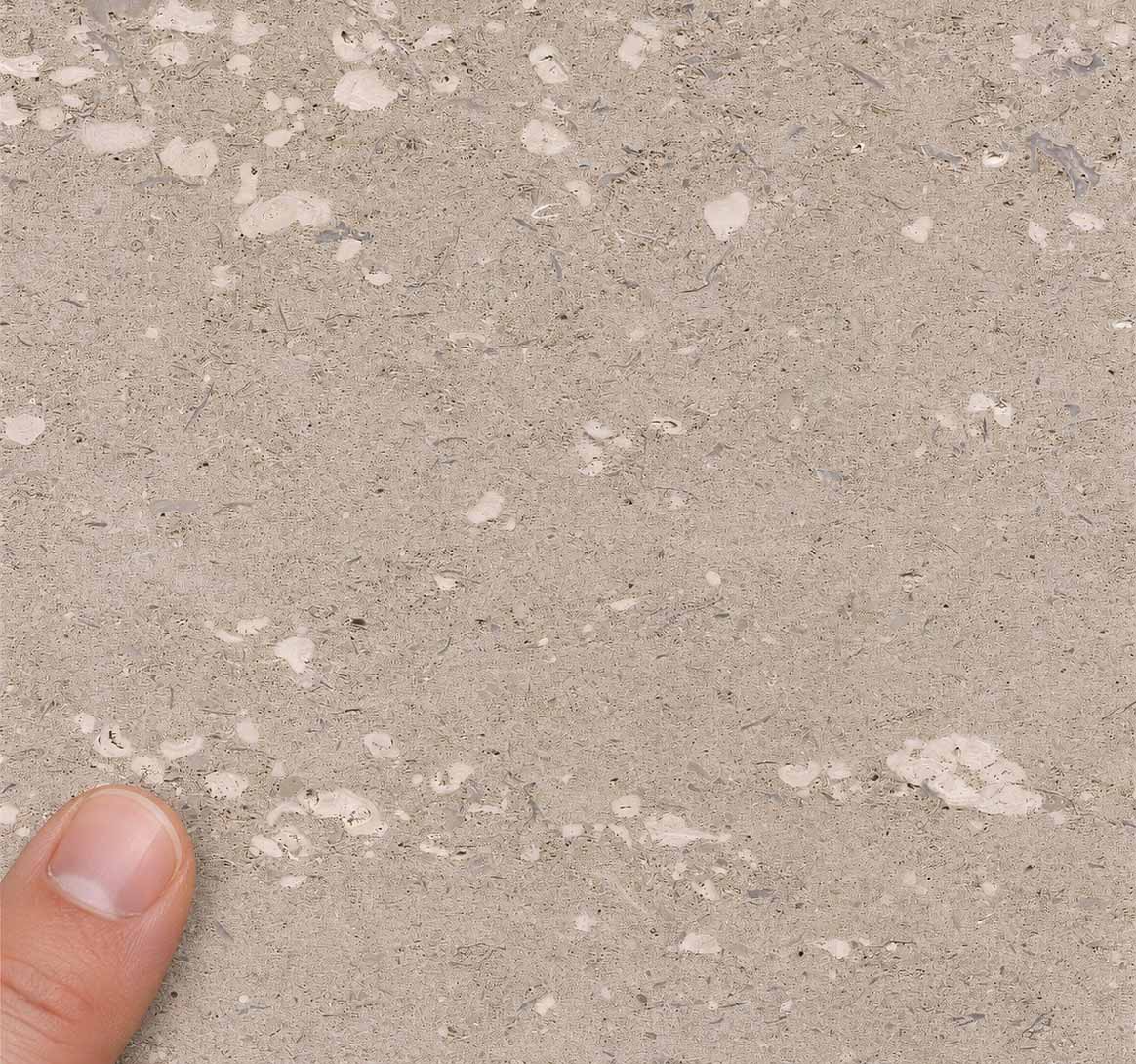
Although understated, Solenopora remains one of the most fascinating geological features of Portland Stone, providing a visible record of ancient reef communities that existed long before the stone was extracted and used in some of Britain's most iconic buildings.
As a fourth generation family business, Albion Stone takes pride in its knowledgeable and dedicated workforce. By combining traditional craftsmanship with modern manufacturing techniques, we produce Portland Stone of the highest quality while minimising our environmental impact.