What upcoming embodied carbon rules mean for architects and how natural stone fits the future
Embodied carbon is moving rapidly from a specialist sustainability concern to a central issue shaping how buildings are designed, specified and approved in the UK. While operational energy has been regulated and steadily reduced for decades, the carbon emissions associated with materials and construction are now firmly in the spotlight.
For architects and project teams, this shift raises an important question. How do material choices made at the earliest design stages affect future compliance, risk and long term value, and where does natural stone sit within this changing landscape.
What is embodied carbon and why it matters now
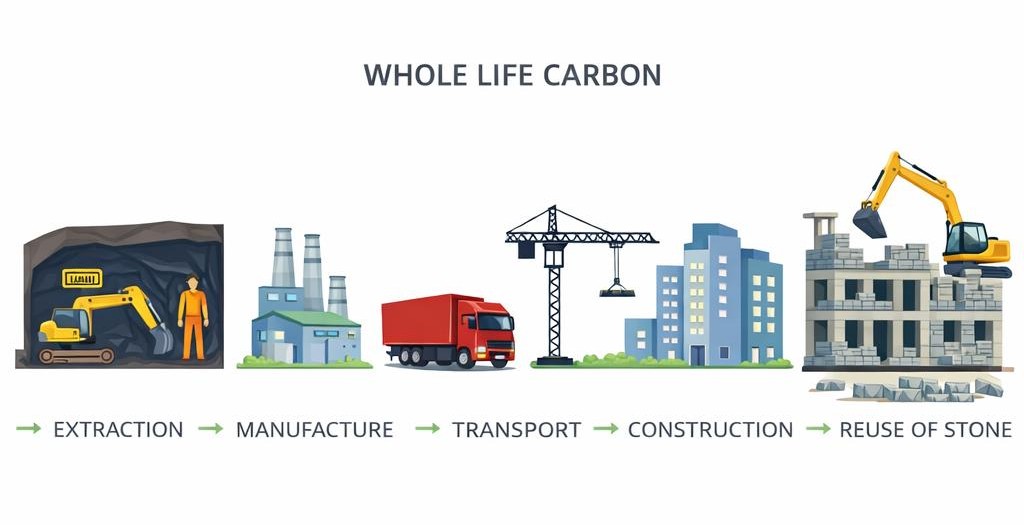
Embodied carbon refers to the greenhouse gas emissions associated with the extraction, processing, manufacture, transport, construction, maintenance and eventual disposal of building materials. Unlike operational carbon, which can be reduced over time through energy efficiency upgrades, embodied carbon is largely locked in at the point of construction.
According to the UK Green Building Council’s Embodied Carbon Briefing published in April 2025, embodied carbon currently accounts for around 64 million tonnes of CO₂ emissions every year in the UK, more than aviation and shipping combined. The briefing highlights that, as the electricity grid decarbonises and buildings become more energy efficient, embodied emissions are expected to represent over half of total built environment emissions by the mid 2030s.
This makes early design decisions particularly significant. Once a building is constructed, there is very limited opportunity to reduce its embodied carbon impact.
The direction of UK regulation
At present, there is no single national embodied carbon limit within England’s Building Regulations. However, the direction of travel is increasingly clear.
The UK Green Building Council briefing notes that while other European countries already regulate embodied carbon, the UK currently relies on a growing patchwork of planning requirements, investor expectations and voluntary standards. London has led the way, with major developments required to submit whole life carbon assessments as part of the planning process, setting a precedent that many expect to spread nationally.
Government commissioned research published in 2025 has reinforced the technical and economic case for regulating embodied carbon, while industry support for mandatory assessment continues to grow. The UKGBC briefing makes the case that regulation would provide clarity and consistency for designers, developers and local authorities, while accelerating the adoption of low carbon materials and construction methods.
For architects, this signals that embodied carbon assessment is moving rapidly from best practice towards expected practice.
Why material choice matters more than ever
When embodied carbon is assessed, material selection becomes one of the most powerful levers available to designers.
High energy materials such as steel, aluminium and kiln fired clay bricks carry significant upfront emissions due to manufacturing processes. Cement production in particular remains one of the largest industrial sources of global carbon emissions.
Natural stone behaves very differently.
Stone does not require firing or chemical transformation. Its embodied carbon is largely limited to extraction, cutting and transport, and when responsibly sourced and locally manufactured, these impacts can be comparatively low. The UKGBC briefing emphasises that material choices which avoid energy intensive processing are among the most effective ways to reduce embodied emissions.
Just as importantly, stone’s durability allows its carbon impact to be spread over an exceptionally long service life. Stone buildings are routinely designed to last for generations, and stone elements can be reused, repaired or repurposed rather than demolished and discarded.
Load bearing stone and carbon reduction
One of the least understood aspects of using stone today is its potential role as a structural material, not merely a facing or cladding.
Historically, stone performed both structural and architectural functions. Many of the UK’s most important civic and institutional buildings rely on load bearing stone construction that continues to perform centuries after completion.
Modern construction has often replaced this approach with layered systems reliant on concrete and steel frames. However, as the UKGBC briefing points out, embodied carbon reduction demands a re examination of such conventions. Reducing the quantity of high carbon materials within a structure is often more effective than attempting marginal improvements to their manufacture.
Where appropriate, load bearing stone construction can reduce reliance on reinforced concrete and steel, simplify assemblies and lower total material volumes. Modern testing, digital analysis and quality control now allow structural stone to be specified with confidence, combining performance assurance with lower upfront carbon.
The role of geological variability and selection
The UK Green Building Council briefing also highlights material efficiency as a critical but often overlooked factor in reducing embodied carbon.
Historically, narrow aesthetic specifications have driven excessive waste by rejecting materials that are structurally sound but visually variable. This practice increases carbon intensity by reducing yield from the same volume of extracted material.
Natural stone is inherently variable. By embracing geological variation rather than over selecting, project teams can significantly reduce waste, improve efficiency and lower embodied carbon without compromising performance. This approach aligns closely with emerging circular economy principles, which prioritise maximum value from every material extracted.
Why local sourcing matters
Transport emissions form a visible and increasingly scrutinised part of whole life carbon assessments.
The UKGBC briefing notes that shorter, more transparent supply chains are essential for credible carbon reduction. Imported materials, particularly those transported long distances by ship or road, can undermine otherwise well optimised designs.
British stone, sourced and manufactured in the UK, offers clear advantages in this context. Local sourcing reduces transport emissions, improves supply certainty and supports robust Environmental Product Declarations, which are becoming essential evidence within planning and procurement processes.
Designing today for tomorrow’s standards
Although national embodied carbon limits are still under discussion, expectations placed on the construction industry are already changing. Planning authorities, public sector clients and investors increasingly expect design teams to demonstrate how embodied emissions have been measured and minimised.
The UK Green Building Council briefing warns that delaying action risks locking unnecessary carbon into the built environment for decades. Buildings designed today will still be standing when future regulations are fully in force.
Architects who understand how structural strategy, material choice and specification philosophy influence embodied carbon are better equipped to guide clients with confidence and future proof their projects.
Looking ahead
The case for regulating embodied carbon is now well established. As attention continues to shift from operational performance to whole life impact, materials that combine durability, adaptability and low embodied emissions will become increasingly valuable.
Natural stone, responsibly sourced and intelligently specified, offers a rare combination of structural capability, longevity, architectural quality and low embodied carbon. In the context of emerging regulation and rising expectations, its role in the future of UK construction may be more relevant than ever.
As a fourth generation family business, Albion Stone takes pride in its knowledgeable and dedicated workforce. By combining traditional craftsmanship with modern manufacturing techniques, we produce Portland Stone of the highest quality while minimising our environmental impact.