What is Bioturbation in Portland Stone?
Bioturbation is a natural geological feature found within many sedimentary limestones, including Portland Stone. It is often visible as subtle lighter markings, swirls or disturbed areas within the stone and is sometimes most noticeable immediately after the stone has been cut and processed.
These markings are not defects or repairs. They are evidence of marine life that inhabited the Jurassic seabed around 145 million years ago and form part of the natural character of Portland Stone.
How Does Bioturbation Form?
Portland Stone was formed in a warm, shallow tropical sea during the Late Jurassic period. Before the sediments became solid limestone, burrowing marine organisms such as worms, shellfish and other seabed dwelling creatures disturbed and mixed the soft sediments beneath them.
This process is known as bioturbation, meaning the reworking of sediments by living organisms. As the sediments were later compacted and cemented together, these subtle disturbances became preserved within the stone.
Today, bioturbation provides a unique geological record of the ancient marine environment from which Portland Stone originated.
Why Is Bioturbation More Visible in Freshly Cut Portland Stone?
A common question we receive concerns the appearance of lighter markings within newly manufactured Portland Basebed.
During the cutting process in our factory, water is continuously used to cool diamond saws and tooling. This leaves the stone fully saturated. When Portland Stone is wet, natural variations within the limestone become more pronounced, making features such as bioturbation easier to see.
The photograph below shows a typical example of bioturbation visible whilst the stone remains saturated following manufacture.
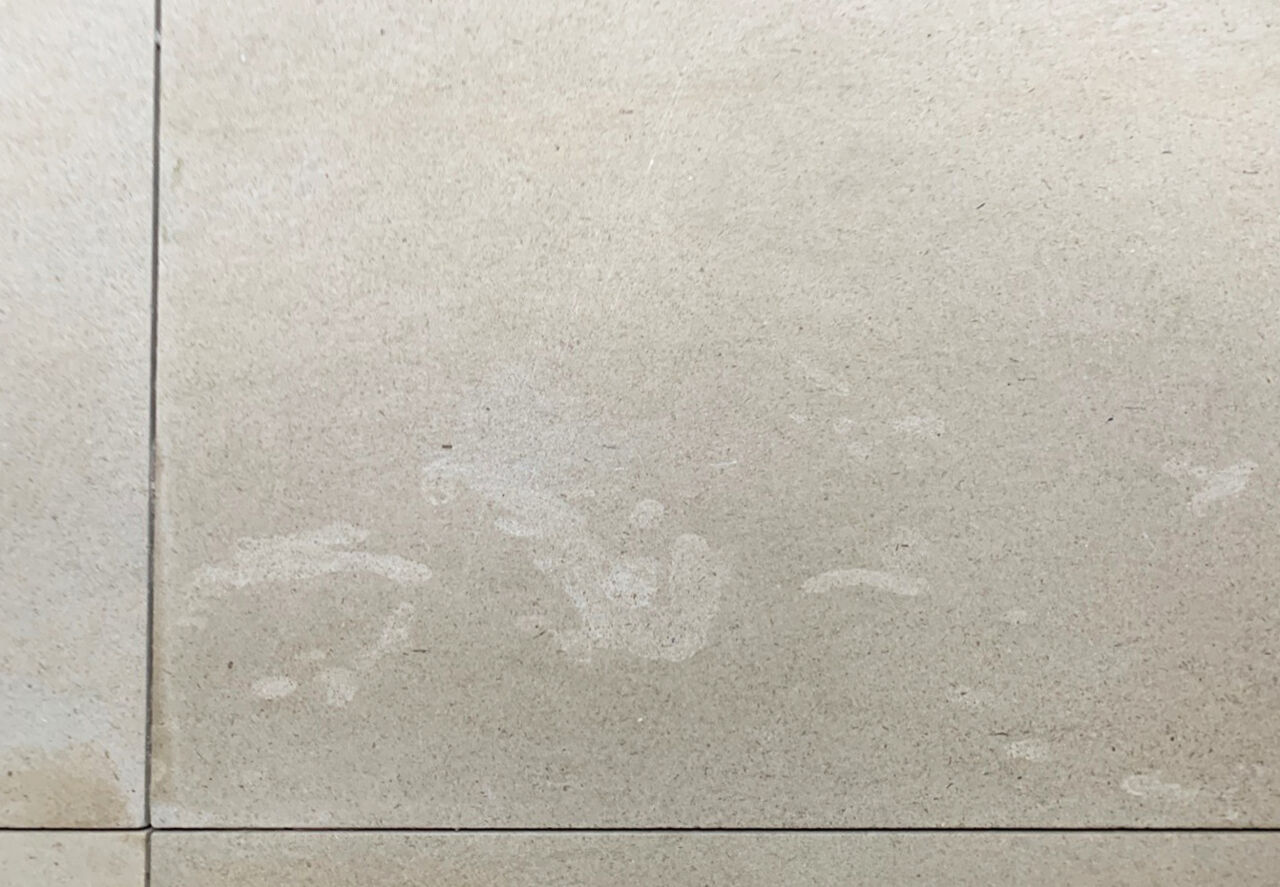
At this stage the contrast between the bioturbated areas and the surrounding stone can appear relatively noticeable, particularly under certain lighting conditions.
Does Bioturbation Remain Visible Once the Stone Has Dried?
As Portland Stone dries naturally, the contrast between the disturbed sediments and the surrounding limestone reduces significantly. The visual impact becomes much more subtle and often difficult to identify without close inspection.
Albion Stone's range panels contain examples of bioturbation that can initially be seen when freshly prepared. Once fully dry, these markings typically blend into the overall appearance of the stone and go largely unnoticed.
Over time, as the stone weathers naturally and develops its surface patina, bioturbation becomes even less visually prominent.
Is Bioturbation a Defect?
Bioturbation is not a defect. It is a naturally occurring geological characteristic found within Portland Stone and many other high quality limestones used in construction throughout the world.
Like fossil shells, Selenopora and other natural features found within Portland Stone, bioturbation reflects the stone's geological history and authenticity.
As a completely natural characteristic, it has no impact on the strength, durability or performance of the material.
The Geological Story Within Every Stone
Every piece of Portland Stone contains evidence of the ancient Jurassic environment in which it formed. Bioturbation is one of many natural features that tell this story, recording the activity of marine organisms that lived on the seabed millions of years before the stone was extracted.
While bioturbation can sometimes appear more visible in freshly cut, water saturated stone, its visual impact diminishes significantly as the material dries and matures. What remains is the natural character, durability and beauty that have made Portland Stone one of Britain's most iconic building materials.
As a fourth generation family business, Albion Stone takes pride in its knowledgeable and dedicated workforce. By combining traditional craftsmanship with modern manufacturing techniques, we produce Portland Stone of the highest quality while minimising our environmental impact.